

A service website is much more than an online business card. It’s where first impressions are made and where potential clients quickly decide if you’re the right fit. Visitors are judging your business by your site’s clarity, professionalism, and approachability, often before they even contact you.
To stand out, your website needs to do more than look sharp. It should build trust, highlight your expertise, and make it easy for people to take the next step. The most effective service website design examples guide visitors with clear structure and engaging content, helping turn interest into real business.
Service Website Architecture: Foundational Pages
A well-organized service website follows a proven architectural pattern. Most high-performing sites include these foundational pages:
– Home: Your digital welcome mat that instantly communicates who you are and what you offer, and acts as a navigational hub.
– About: Builds trust by telling your story, introducing your team, and sharing your values. Puts a human face on your brand.
– Contact: Make it effortless for visitors to reach you. Easy to find and use, this page facilitates communication and trust.
Careers pages can also be valuable if attracting talent is a goal. They showcase your culture, highlight open positions, and signal growth to clients.
Service Subpages: Lead Generation and SEO
Service subpages are the workhorses of your service website. Each major service deserves its own optimizable page, which is designed to rank for high-intent keywords in both traditional and AI-powered search. Begin each service page with a headline that addresses a client’s pain point, explain your unique approach, and use proof points like testimonials or results. End with a clear call to action, such as a scheduling tool or a contact form, to convert interest into leads. See our website and SEO service pages for examples of how this works in practice.
Resource Pages: Top-of-Funnel Traffic
Resource pages (blog posts, white papers, guides, and free downloads) are essential for attracting visitors at the top of the funnel. These pages generate organic traffic, establish your expertise, and can be used to collect leads via newsletter sign-ups or downloadable offers. Linking resource content to your main service website and SEO service pages strengthens internal SEO and guides visitors deeper into your sales funnel. For tips on writing high-performing resources, check out our website copywriting guide.
Lead Generation and Trust Signals
A strong service website makes it easy for visitors to take the next step. Use prominent calls to action and streamlined lead capture forms to reduce friction. Build trust with social proof, such as client testimonials, reviews, case studies, and recognizable client logos. Display credentials, awards, and affiliations, but always keep your message focused on the client’s needs and your ability to solve their problems.
Jason Gresalfi, our Web Director, notes: “You can’t fake credibility online. The most effective service websites make it obvious why a client should trust you. Make sure to back up any claims you make with proof!
Mobile Experience and Local SEO
Most visits to service websites now happen on mobile devices. Ensure your site loads quickly, is easy to navigate, and looks great on any screen. For local service providers, optimize for local SEO with location-specific keywords, maintain an up-to-date Google Business Profile, and make sure your contact info is consistent across platforms. Accessibility has also appropriately been in the spotlight more than ever before, and should always be a core consideration when designing and building web-based assets.
Common Mistakes to Avoid
Even the best service providers sometimes miss the mark online. Common pitfalls include:
– Grouping all services on a single page, which dilutes SEO and confuses visitors.
– Complicated navigation that hides important information.
– Neglecting mobile optimization or fast load times.
– Missing or outdated trust signals, such as testimonials or privacy policies.
– Forgetting to include clear next steps or calls to action so leads have an obvious pathway to engage with your business.
Regularly review your website, update your content, and look for new ways to improve user experience and conversion rates. Configuring and tracking analytics is an invaluable tool to help continuously improve website performance.
What to Look for in a Web Design Partner
Choosing a partner for your service website is as important as the design itself. Look for agencies with experience building service website examples in your industry. Review their portfolios, ask about their process, and seek out client references. The right partner will listen to your goals, communicate clearly, and leverage their expertise to create a website that’s both beautiful and strategic.
Service Website Design Examples
Here are a few examples of service websites our agency has designed and developed:
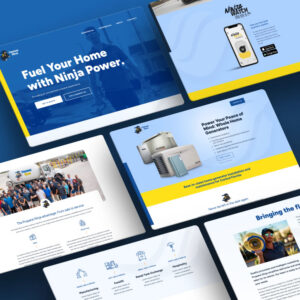

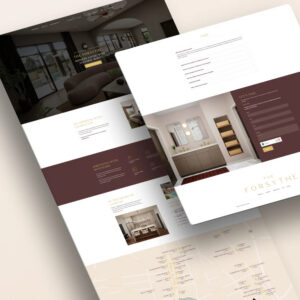


Each of these websites demonstrates strong structure, clear storytelling, and a focus on user experience. They make it easy for visitors to find information, build confidence, and take the next step toward working with our clients.
Turn Visitors Into Leads
A well-crafted service website does more than attract attention. It builds relationships and turns visitors into leads by focusing on your clients’ needs. Ready to see what a better website can do for your business? Start with a free consultation and discover how your service website can work harder for you.